



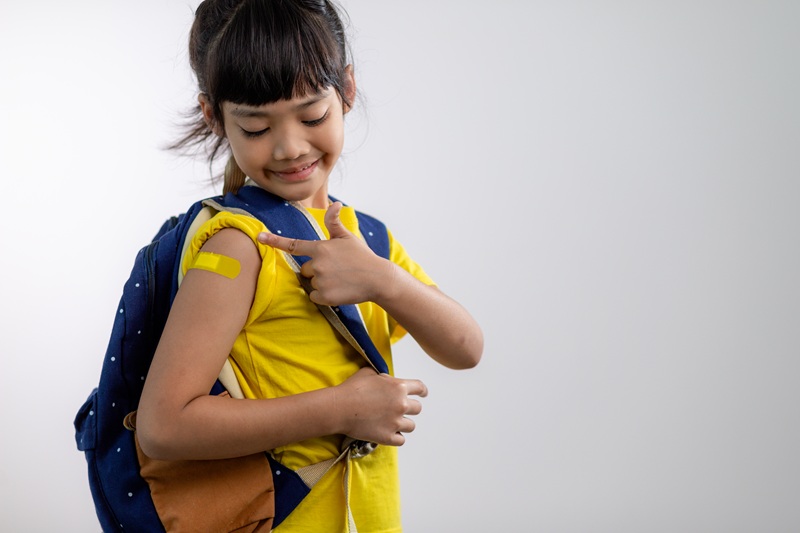
If you’ve recently received a consent form from school about a vaccine for school children, you’re not alone in feeling a bit unsure about what’s involved. School vaccinations in Australia are delivered each year as part of a long-running national program designed to protect adolescents against serious, preventable diseases, and to lift overall community immunity at the same time.
This guide walks through which vaccines are offered, when they happen, and what to do if your child misses a dose or you’re not sure where their immunisation records / AIR statements sit.
Why A Vaccine School Children Program Exists
Vaccinating teenagers at school makes good public-health sense. Adolescents are at higher risk of certain infections, and many don’t see a GP regularly during these years. Delivering vaccines through schools means high coverage with minimal disruption to families.
NSW Health works in partnership with schools to offer free vaccines to students in Year 7 and Year 10. According to NSW Health’s School Vaccination Program, parents and guardians must provide consent before any vaccine is given.
What Vaccines For Teenagers (Year 7 Vaccines) Include
In Year 7, students in NSW are offered two free vaccines as part of the NSW school immunisation program:
- HPV vaccine — protects against the human papillomavirus, which can cause several cancers, including cervical, throat, and other genital cancers. Since 2023, only one dose is needed (down from two), based on updated international evidence.
- dTpa booster — a combined vaccine protecting against diphtheria, tetanus, and pertussis (whooping cough). This is a single booster that tops up protection from earlier childhood doses.
Both are part of the National Immunisation Program and are free for eligible Year 7 students.
What Year 10 Students Are Offered
In Year 10, students are offered the meningococcal ACWY vaccine, which protects against four common strains of meningococcal disease (A, C, W, and Y). Meningococcal disease is rare but can be very serious, with a rapid onset. Early protection in adolescence matters because teenagers and young adults have higher rates of carriage.
A separate meningococcal B vaccine is also available privately through your GP for adolescents who want broader protection. It’s not part of the NSW school program, but it is something you can discuss with your child’s doctor.
If you’re in Bomaderry, NSW, you can ask our paediatric GPs for a meningococcal B vaccine as a protection boost for your teens.
What If My Child Misses A Dose? Catch-Up Vaccinations
Plenty of children miss a school vaccination day due to illness, an absence, a missing consent form, or simply moving schools at the wrong time of year. The good news: catch-up vaccinations are straightforward.
NSW Health runs a catch-up program in Year 8 and Year 11 for students who missed their Year 7 or Year 10 doses. Beyond that, your GP can administer any missed adolescent vaccines free of charge for eligible patients up to age 19 (and up to age 25 for HPV).
If you’re unsure whether your child is up to date, your GP can check their immunisation records / AIR statement during a visit and arrange any catch-ups in the same appointment.
How To Check Your Child’s Air Statement
The Australian Immunisation Register (AIR) keeps a record of every vaccination given in Australia. You can access your child’s immunisation history statement in three ways:
- Through your Medicare online account via MyGov
- Through the Express Plus Medicare app on your phone
- By asking your GP, we can look it up during an appointment
Parents can access records for children under 14. Once your child turns 14, they will need to access their own statement (or give you consent to view it).
This statement is also what you will need for childcare, school enrolment, and certain travel requirements.
Other Vaccines Worth Thinking About During The School Years
The school program covers the routine adolescent vaccines, but there are a couple of others worth a conversation with your GP:
- Flu vaccine for children (seasonal influenza) — annual flu vaccination is recommended for everyone six months and older. Children are particularly likely to spread flu within households and schools, and the vaccine is free for kids aged six months to under five years, plus those with certain medical conditions.
- COVID-19 boosters — current recommendations vary based on age and risk factors. Your GP can advise what’s appropriate for your child.
- Travel vaccines — if you’re heading overseas, especially to higher-risk regions, your GP can review your child’s needs and recommend any additional vaccines well in advance of travel.
What To Expect On The Day
Most school vaccination days run smoothly. Children line up, see the nurse, get their vaccine, and rejoin class. Common, mild side effects include:
- Soreness or redness at the injection site
- A mild fever or feeling tired for a day or so
- Sometimes a mild headache
Serious reactions are very rare. If your child feels unwell after their vaccine, give them paracetamol if needed, plenty of fluids, and rest. Contact your GP if symptoms last more than 48 hours or you’re worried.
A Small Step at School, A Big Step for Their Health
Back-to-school season is busy enough without adding another consent form to the pile. But the few minutes it takes to sign and return that vaccination form gives your child meaningful, long-term protection against diseases that can be serious.
If you’re not sure where your child sits with their immunisation records / AIR statement or whether they need a catch-up, your family GP is the best place to start. Our team at Meroo Street Family Practice provides vaccination services for the whole family, and we can review your child’s full immunisation history in a single appointment.
To talk through your child’s vaccinations or book a catch-up, book online or call us on (02) 4421 4655 for more details.
Frequently Asked Questions
Are school vaccinations compulsory in Australia?
No, school vaccinations are not compulsory. Parents or guardians must provide written consent before any vaccine is given. However, vaccination is strongly recommended for community and individual protection.
What if my child wasn’t at school on vaccination day?
Catch-up clinics are usually offered at school the following year. If those are missed too, your GP can administer the same vaccines free of charge for eligible patients.
Does the school vaccine for HPV still need two doses?
No. Since February 2023, a single dose of the HPV vaccine has been recommended for adolescents in the school program, based on updated international evidence showing one dose provides equivalent protection.
Can teenagers get the meningococcal B vaccine through school?
In NSW, the school program includes meningococcal ACWY in Year 10 but not meningococcal B. MenB is available privately through your GP if you’d like broader protection.
How do I get a copy of my child’s immunisation history?
You can access the Australian Immunisation Register (AIR) statement through MyGov, the Express Plus Medicare app, or by asking your GP at your next appointment.